Every year, Spark invests millions into the Skinny Jump programme, with one of its largest costs being the purchase of new Jump modems and we want to make sure we are using this generous investment wisely.
Our approach has been to encourage customers who do not need their modems any more to return these so that they can be delinked and reissued in much the same way that libraries issue books. But the main difference of course is that there is no time limit on the Jump ‘loan’ modems; customers are welcome to keep the modem for as long as they need it.
But the challenge is how to encourage customers to return it when they don’t need it. Here are some things you can do to help:
(1) Make sure every modem you issue has the “Stopped using your Skinny Jump Modem” sticker attached.
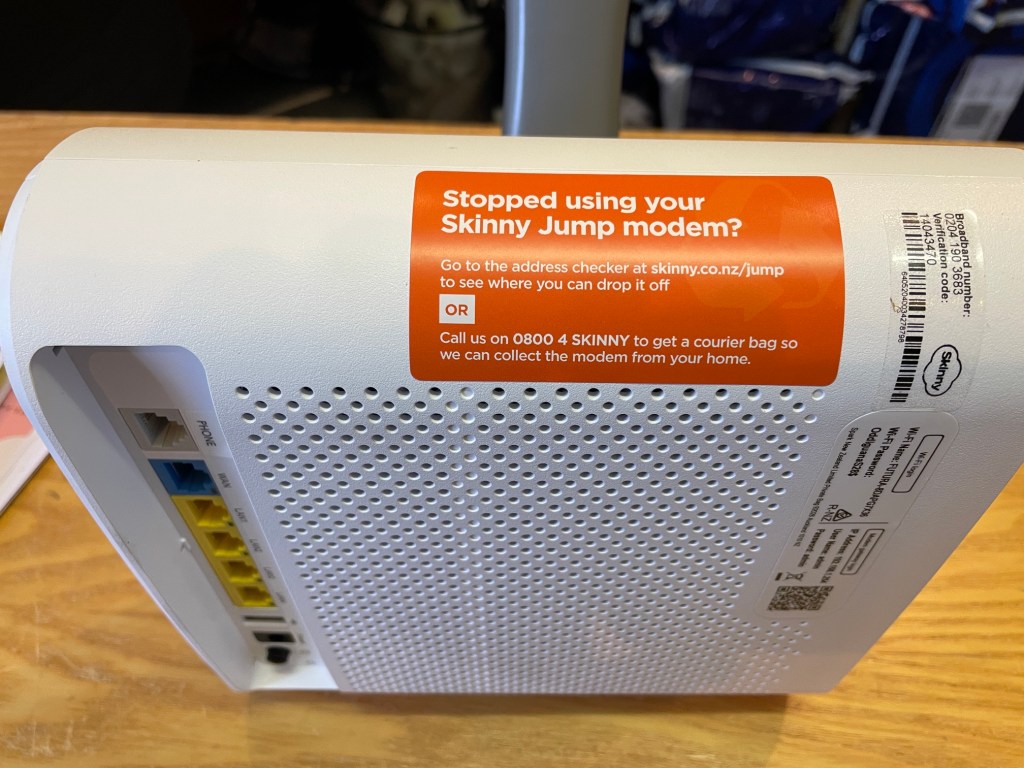
Maybe you have run out of these? If so, you can order these using the online order form for Jump collateral.
(2) Display the Modem Returns poster, as a reminder to Jump customers. You can also order copies of this poster through the online order form. Note the default quantity is 100; you can change this in the comments field at the bottom of the order form. I suspect you might not have enough wall space to display 100 copies!
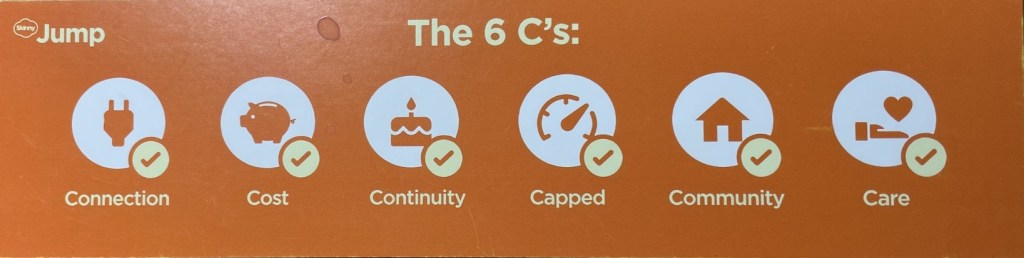
(3) Always stress the importance of returning the modem if not needed any more. This is part of the 6 C’s discussion we expect you to have with every customer receiving a Jump modem. Now here’s a quick test for you – which of the 6 C’s is about modem returns? (answer at bottom of this post).
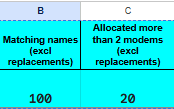
(4) Never issue a replacement modem unless the customer returns their faulty unit. This appears to be part of the problem. We are currently consulting with our 22 largest partners (the ones who issue the most modems) and have discovered that over 1600 modems have been issued without the faulty ones being returned. This doesn’t include modems reported as lost or stolen. Remember that you can monitor this yourself in your Jump Gsheets. Cells B1:C2 report the number of duplicate (or more) issues:
Thank you to the partners who have already responded to my email about this issue and I do understand that it is often difficult to remember whether individuals have already been issued a modem (especially when you have had over 1500 Jump customers in 10 years!). We keep stressing that Jump is a high trust model, where we encourage partners to take applicants at their word, unless you have local knowledge that suggests someone is abusing the opportunity. We don’t want to add any complications into the signup process, like asking customers for ID or requiring staff to pre-check the Jump register before issuing modems. We know that some partners use their ‘book a librarian’ service to assign a timeslot for Jump signups and this does provide an opportunity to check if they are a repeat customer before they arrive. But we also know that some customers can be quite devious using different names and emails to secure additional modems.
I will be compiling a brief report on the feedback from our largest partners and sharing how they are tackling this issue in a further post. But I welcome feedback from any partner with suggestions. I am waiting with baited breath for feedback from one of the top 22 partners, with a stunning record. Despite issuing nearly 1000 modems, their Jump register only reports 7 duplicates and none with 3 or more modems!
Answer to 6 C’s question: Community – returned modems can be reset and re-issued; faulty modems can be repaired; old modems can be recycled. This helps more homes get access to a truly affordable internet service, it keeps Skinny Jump sustainable and it’s good for our environment. Reference pp.4-5 of Partner Guide.


