What do I do with a returned modem that isn’t a Skinny Jump one?

I have had two questions from partners about this so far this week (and it’s only Wednesday), so that calls for a blog post!

The challenge that partners are facing is that the same physical modem is used by Spark and Skinny for a range of different services, some of which are wireless and others are for landline (fibre) connections. So it not always easy to identify which ones have been provisioned for Skinny Jump.

My advice is to lodge ALL returned modems that look like a Skinny Jump modem through our Modem Returns Process. The Skinny team will advise us whether the modem has been provisioned for Jump or not.

Any ‘non-Jump’ modems will then be treated as ‘faulty’ and this will result in us sending you a recovery courier bag. We return these to CEVA, the company that manages the supply of modems, and it is their job to arrange the repair of faulty Jump modems or the transfer of other modems to the right party, or in case of very old or damaged modems, they would most likely be sent for recycling.

Supplies of Jump Collateral

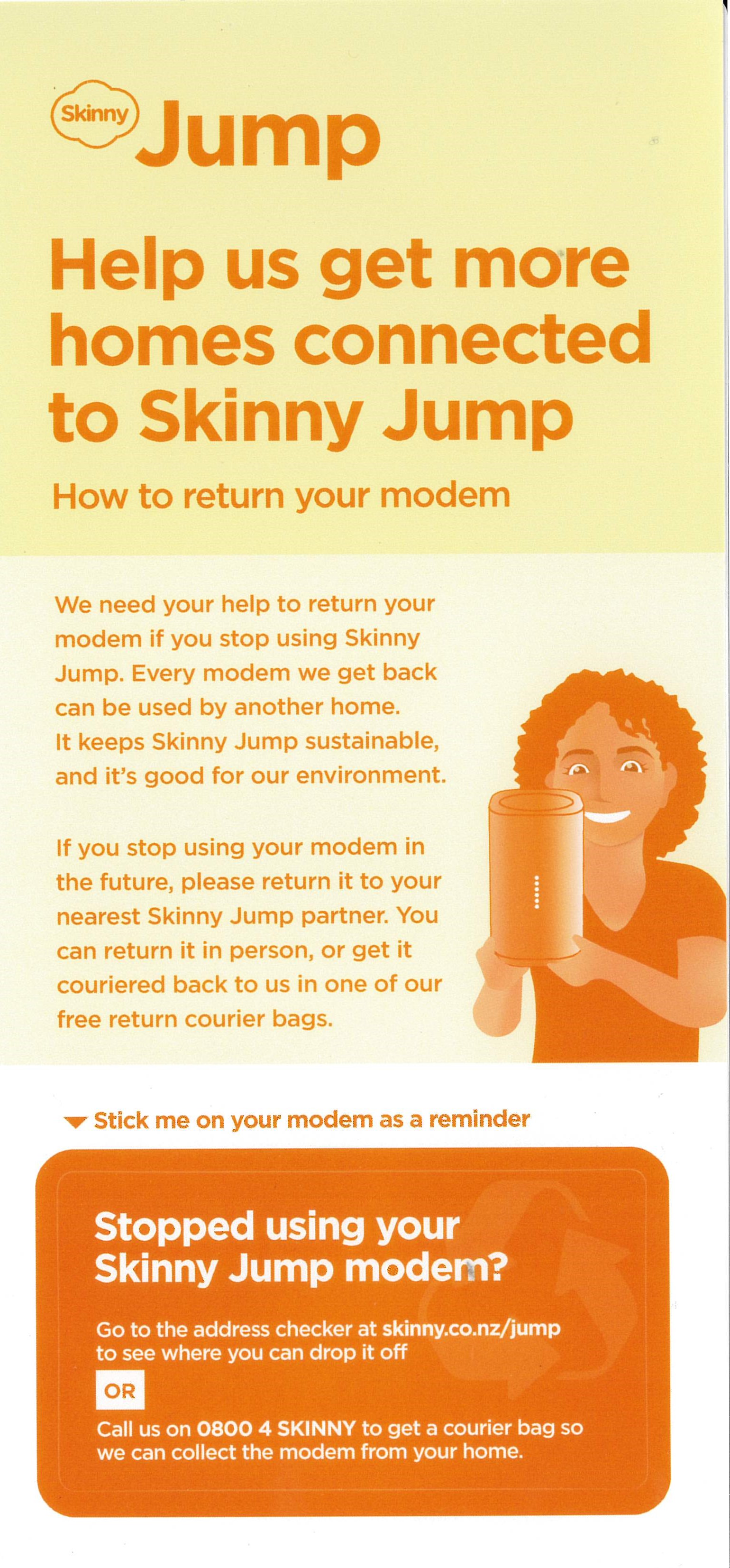
I am starting to receive requests for more supplies of the above “Stopped Using your Skinny Jump Modem” stickers; I suspect that this could mean other partners are also running out. We (DIAA) have a reasonable supply of these and can supply further copies (they come in bundles of 10). We are planning a further bulk supply over the coming months, but we can hopefully keep you stocked in the meantime. Remember to attach this sticker to every modem that you issue.

If you need more copies please send your requests to Shelley (shelley@diaa.nz) and she’ll get some on the courier for you.

And while we are talking about Jump collateral, do remember that you can order this online through our Stepping UP website: Stepping UP>Partner Resources Hub>Skinny Jump Partner Resources> scroll down to: Skinny Jump Promotional Materials

More on Jump modem packaging

We continue to get requests from partners for empty Jump boxes, so that returned modems, when reset, can be issued to new customers with the packaging. My previous posts explained that this is not a requirement; modems can be issued without packaging – the essentials are a power supply, an ethernet cable and a user guide.

My April blog post indicating that we could send partners boxes of empty boxes is no longer a viable option. For the last 2 – 3 years we have had courier sponsorship from NZ Post through their Delivering for Good programme and this made it possible for us to send out empty boxes, but this sponsorship unfortunately came to an end on 30 June.

Certainly, partners still have the option to retain some packaging that is returned with faulty modems; this could then be re-used with reset modems. Some library partners have ‘library bags’ for use by customers to carry home books; these would be a good sustainable option.

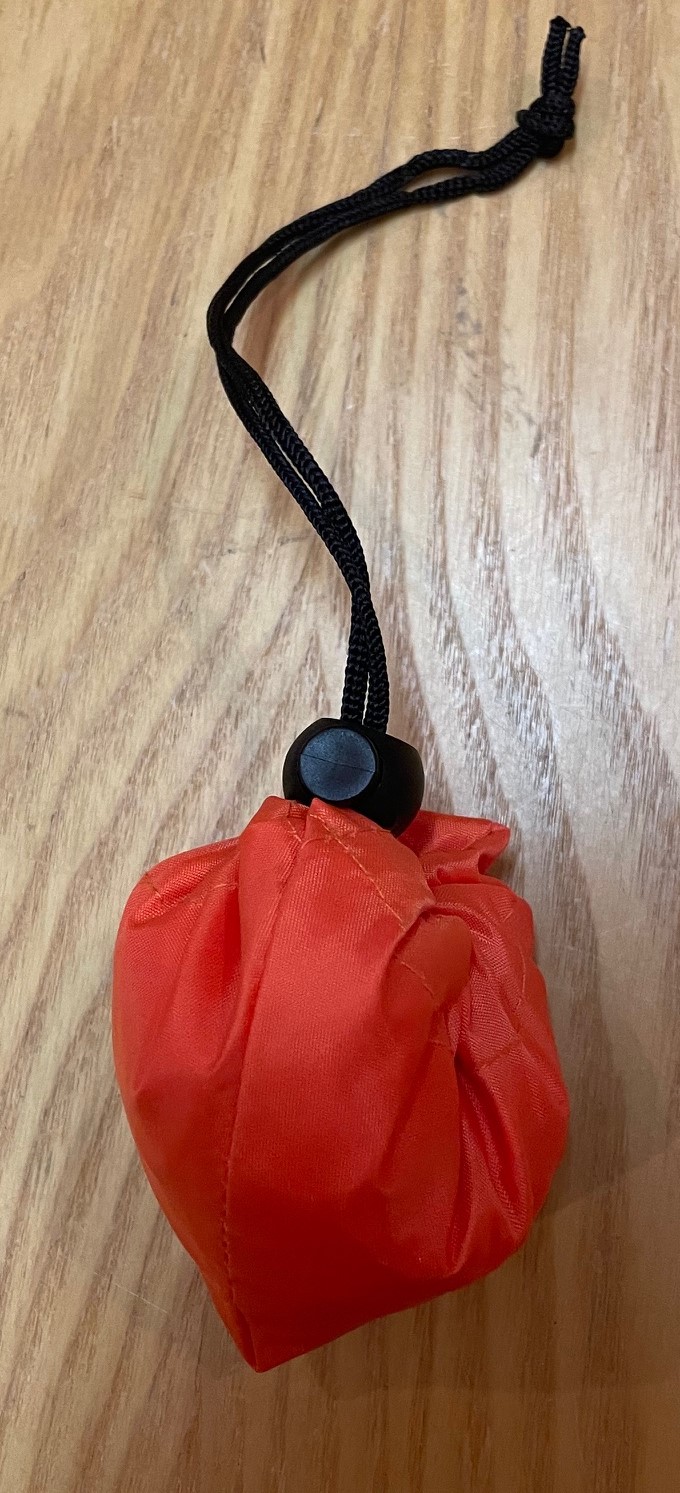
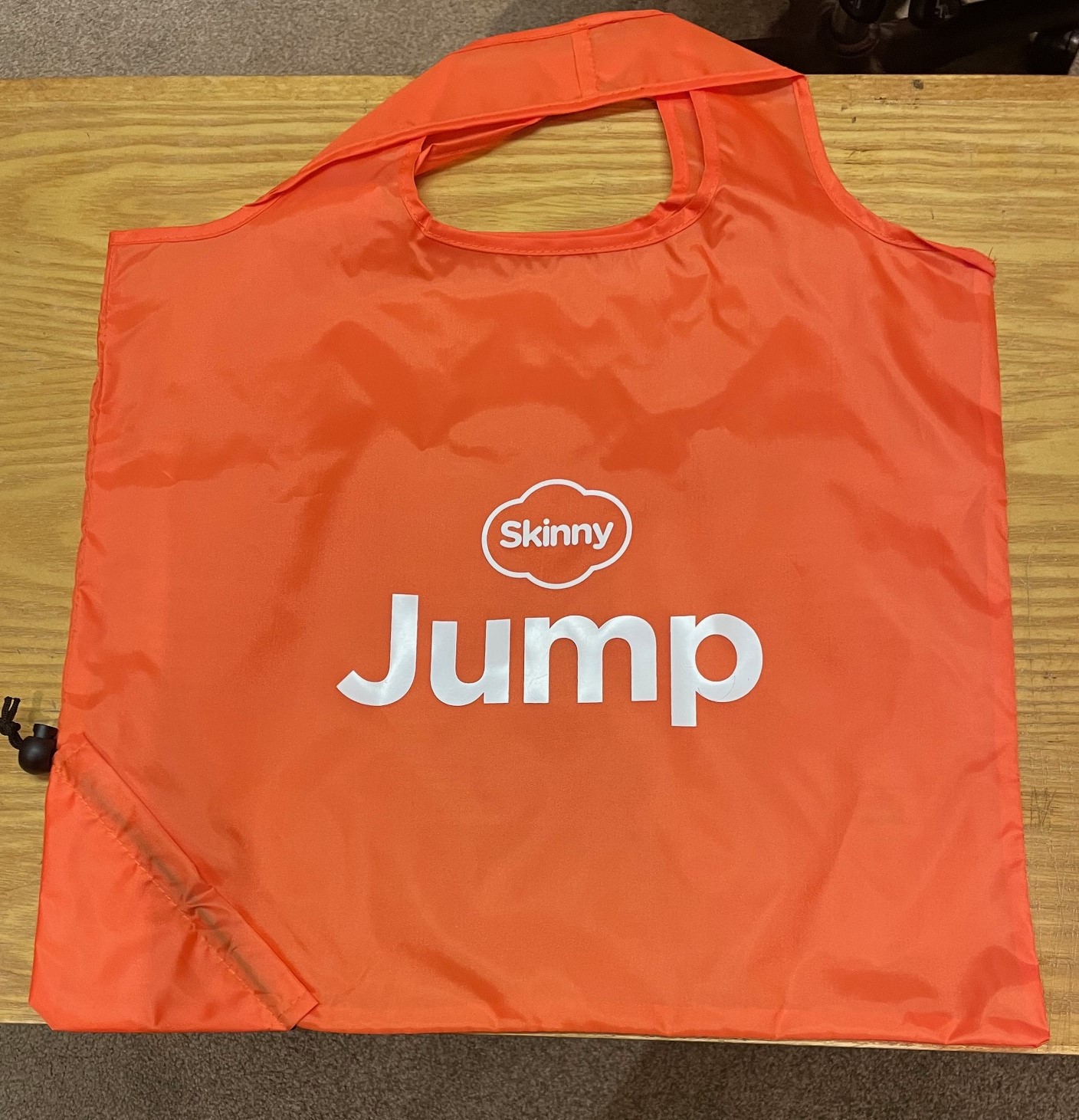
The Skinny Jump team has offered another solution – their Skinny Jump ‘zero’ bags – these are tough re-usable carry bags that scrunch up to almost nothing – see photos below.

We don’t have huge supplies, so we will only be sending these on request; please contact jump@diaa.nz with any requests.

Jump training for new staff

I had a call this week from a staff member in one of our Jump partners who had been asked to take over managing the Jump programme because the person who had been managing this had left. Not surprisingly, she had a number of questions about our processes.

Staff changes in our Jump delivery partner network are not unusual. We met with the Skinny Jump team this week and spent some time discussing the on-boarding process for new Jump partners. But what we quickly realised that everything we were discussing applied equally to new people joining the Jump delivery network.

We have some excellent resources for supporting new Jump delivery staff, but the challenge is to work out how to engage with them and let them know what is available. So here are a few questions for you – if you are reading this, then you are probably an experienced Jump delivery partner and can help connect us with Jump newbies.

  1. Do you know that there are three types of Jump delivery partner?
    • Jump referral partner, knows about Jump but is not involved in the issuing of modems;
    • Jump connector, issues modems and helps customers set up their Skinny Jump accounts and understand the top-up process;
    • Jump specialist, understands all the Jump processes, including modem supply and recovery of returned modems.
  2. Have you completed a Jump Partner Pathway online course?
    • Course 1 is for everyone involved in the Jump delivery process (referral, connector and specialist);
    • Course 2 is for everyone involved with the issue of modems (connectors and specialists);
    • Course 3 is for at least one person in each delivery partner organisation (specialists)
  3. Do you know who to contact for support with Jump processes?
    • Sue for training and promotion,
    • Shelley for day-to-day operations, and
    • Laurence for modem supply and recovery
  4. How should you contact the Skinny Jump team?
    • As a delivery partner, you shouldn’t contact the Skinny team directly
    • Partners should contact the DIAA team for any support required (jump@diaa.nz for modem supply issues; 0800 463 422 for other day-to-day operational issues; sue@diaa.nz for training and promotional resources)
    • Customers should be encouraged to contact Skinny directly if they have a problem using their modem, topping up their accounts and for reporting faults
  5. What are the most important tools for Jump partners?
    • Jump Partner how-to guide and FAQ, February 2023 edition
    • Skinny Jump Partner Resources, incl Partner Pathway training modules
      • Jump Profile Form, to be completed for every modem issued (except replacements for faulty modems)
      • Modem Returns Form, to be completed for every returned modem or when partners encounter a problem during the modem setup process
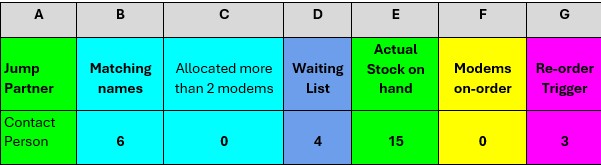
      • Partner Google Sheets, activity record for each partner (key document for managing supply of modems); contact Laurence or Shelley if you can’t access your GSheet.

And a final word – if you are planning to move to a new role, please let the team at DIAA know (contact Laurence, Shelley or Sue) so that we can update our records and help the team member replacing you get up to speed with Jump.

Jump Modems without Broadband stickers

A number of Jump delivery partners are reporting an increasing frequency of new modems being supplied without a broadband sticker – that’s the clear plastic sticker on the side of the modem:

I posted about this in September 2023 when I first discovered that the most common problem was that the stickers had come off the modem and attached themselves to the inside of the box, so it pays to keep checking this first. We have raised this issue with CEVA, the company that ships the modems, seeking their assistance in ensuring that the stickers do not become detached when the modems are being boxed.

But if there is no sign of the sticker, the modem needs to be classified as faulty and a Modem Returns form completed. Explain on the form that the modem has no BB sticker and we will send you a courier bag to recover it for repair.

Concerns about possible ‘scamming’ practices with Jump

From time to time I get approached by a partner who suspects that one of their customers is ‘scamming’ the Jump modem process. When this happens we try and work out a strategy to handle this on a case by case basis, so that partners and their staff are not having to face confrontational situations. Staff safety is paramount and we are happy to provide whatever support we can to ensure that the Jump delivery experience remains a positive one.

I have summarised a few scenarios below, as reported by partners and suggested some possible responses.

  1. More than one modem requested by people living at the same address. There are many situations where this is totally okay. The most common example is social housing units (although these typically have separate apartment numbers), but we also encounter this where people are living in different dwellings at the same physical address (this is quite common in many rural properties for example). But is also occurs when someone is living in a cottage separate to the main dwelling where the distance is too great for the WiFi signal. In some situations, two or more families are living in the same house, and provided they are not part of the same family unit, then they can be supplied with separate modems. Suggestion: For online applications I get an alert whenever a duplicate address shows up; I then check the applicant’s name, phone and email and if necessary view the property on Google Maps street view to determine if it is a single or multiple dwelling site. If I have any concerns I suspend the delivery until Shelley contacts the applicant to find out more. What is interesting is that most people do not respond to Shelley’s text inquiry (which in itself suggests there could be something fishy) and the application expires after 10 days. It is difficult for partners to do this sort of checking, but the principle really is to query anything that looks odd; if you are satisfied with the explanation, then you can proceed to issue a modem. But if you are not, then you have the discretion to decline the application.
  2. Same person requests a second modem within a short time. This definitely needs an explanation before a further modem is issued. If you are not satisfied, then you have the discretion to decline the application. One of our partners discovered repeated applications by the same family and the same address; they were shopping around, getting modems from different libraries in the same city. Staff became aware of this and created an informal ‘black list’ as an alert for any future applications. The exception of course is when the modem is faulty. Suggestion: Before issuing a modem to someone who claims their modem is faulty, make sure they have reported the fault to the Skinny Care Team or they have returned the faulty unit to you. Partners can also check their Jump GSheets to identify repeat applicants. Simple do a search (Ctl F) for the applicant’s name to identify duplicates.
  3. People who miraculously change their address when the address checker indicates ‘no coverage’. This is a bit more challenging. Skinny Jump does operate on a ‘high trust’ basis, but if there is clear evidence that someone is providing a false address, then partners have the discretion to decline the application. For online applications, we frequently get people at addresses that pass the coverage test, but then ask for the modem to be sent to a different address (which 9 times out of 10 fails the coverage check). Suggestion: For online applications we automatically decline any applications where the requested delivery address is not in Jump coverage. We then contact the applicant to find out why they want it sent to an address where the modem cannot be used. In most cases, we never hear back from those who are possibly scamming the system; people who do have a genuine reason always respond.
  4. People who ‘give’ their modems to someone else and then want another one. This is a bit strange and partners who have reported this have advised that they suspect the modems might have been on-sold (as opposed to ‘given’). It is a breach of the Jump conditions of service for anyone to sell or otherwise dispose of a Jump modem. The Terms and Conditions state: “You may not sell, lease, dispose of, lend or otherwise part with possession of, or modify the Modem in any way“. Suggestion: In this situation, we would advise partner to respectively decline to issue another modem, unless there is an incredibly good explanation. An exception we have encountered is where two people living together have split and one person has taken the modem with them, even though it was registered under the other person’s name. In this case, we treated the modem as ‘stolen’ and asked the Skinny team to block it and delink, so the customer could set up with a new modem.
  5. My modem has been stolen or lost. Regrettably, this is a very common issue. Almost every day at least one Jump modem is reported as ‘lost’ or ‘stolen’. Suggestion: Customers must be directed to the Skinny Care team, so that the modem can be identified and blocked before a replacement is issued. Partners should never replace a modem unless the old one has been returned.
  6. Other situations? Do send me an email (jump@diaa.nz) if you are encountering any other ‘suspicious’ behaviour.

Replacements for faulty modems can be re-provisioned for Ciena

A partner has raised a question about whether a Ciena customer can continue on the programme if their modem becomes faulty.

The short answer is, YES.

There is a provision on the Modem Return form to indicate if the customer reporting the faulty modem is on a sponsored plan, such as Ciena or OCHT. Partners should make sure this option is selected and this will trigger an action to get the replacement modem re-provisioned for Ciena or OCHT.

EDOS to end 30 June 2024

The Ministry of Education’s Equitable Digital Access (EDOS) programme is definitely ending on 30 June 2024. Some were hoping there would be a further extension announced in yesterday’s Budget, as there was last year.

But here is the decision in black and white in the Budget documents:

The Ministry is currently finalising an offer for households that are currently part of the programme and expects this to be finalised next week. In the meantime, any inquiries should be directed to EDOS on 0800 441 844.

What does this mean for Jump customers who have been part of EDOS?

Yesterday, the Skinny Jump team notified all EDOS households with an MOE-sponsored Jump connection that the sponsorship will end in 30 days and their Jump connections will revert to standard Skinny Jump. This will happen automatically unless customers contact Skinny to advise that they wish to terminate their connection.

Customers who want to terminate their service will be encouraged to return their unwanted Jump modem to their nearest Jump partner and this can be processed through our standard modem returns process.

We do not know the details of what the Ministry will be offering other EDOS households, but it could lead to some choosing to switch to Jump. They are of course welcome to do this, subject to normal Jump coverage and eligibility criteria.

Please encourage them to also return any unwanted modems; we can arrange collection and send them for recycling. If it is not a Skinny Jump modem then it shouldn’t be managed through our standard Modem Returns process; please just set them aside and let us know (jump@diaa.nz) so that we can send you a return courier bag or label.

Reset modems – to box or not to box?

Two partners have been in touch this week (and it’s only Tuesday!) about handling modems that have been returned and then reset remotely by Skinny for re-issue.

The dilemma they face (which I am sure is shared by many other partners) is whether to issue the modem without its packaging. As one partner pointed out, it is not very professional to issue a modem and its extras – power supply, ethernet cable, user guide, modem return flyer and ‘keeping your whānau safe’ pamphlet- without some form of packaging. They have used library bags in the past, but these are no more.

Our approach to date has been to encourage partners to issue reset modems without packaging, but we really didn’t think about all the tag-along bits and pieces.

We have raised this with the Skinny Jump team at Spark to see if we could get supplies of new packaging but a good interim step was suggested by another partner – set aside any packaging returned by customers rather than send it back to us.

We are going to do this as well, at least in the meantime – we recover an average of 30 faulty modems every week, and many of these include their packaging; we are going to start retaining the packaging so that we can send some to partners as required.

Couriering a single empty box is probably a bit over the top, but we could possibly package six Smart Modem boxes using the same boxes that the modems arrive in.

If anyone has a better idea, please shout it from the rooftops!

Always use your own email when filling out a Modem Returns form

I had an inquiry today from a partner wondering if the modem she had entered on a Modem Returns form had been de-linked yet, as she wanted to proceed in setting up her customer with a new modem.

I explained to her that she should have received an email notification from the Skinny Care Team, advising her when the modem has been delinked. But then I checked her Modem Return responses and realised she had used a generic email at the start of the form.

This email should always be the one belonging to the staff member completing the form.

Skinny uses this email to notify you when the modem has been de-linked and whether it is ready for re-issue or whether it should be set aside until we (DIAA) send you a recovery bag.

In the case above the partner had used a generic internal email, so that not only did she not receive the notification email, no-one would have received it. As an internal email, it was set to reject any outside messages.

Partners should get a heads-up about this as soon as they submit a Modems Return form, as a copy of the information submitted on the form is returned to the email entered in the first field on the form. If you don’t receive this, then it is possible you have used an email that is blocked for outside parties like Skinny Jump.